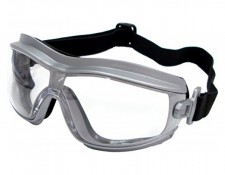
Q: What does a dual-molded PC and TPR frame actually change?
A: It separates two jobs that a single-material frame has to do at once. The polycarbonate section is rigid, so the lens stays square and does not distort under strap tension. The TPR section is soft, so the part touching the face follows its contours instead of bridging over them. In practice that means a better seal and less pressure on the bridge of the nose over a full shift.
Q: Why an elastic strap instead of temple arms?
A: Three reasons. A strap holds position when the wearer is bending, climbing or moving quickly. It passes under a hard hat suspension without fouling it. And it does not conflict with the head harness of a half-mask respirator, which temple arms often do. Where the eyewear is put on and taken off constantly and no other PPE is worn, temple-arm spectacles are the more convenient choice.
Q: What does conformance to EN 166 cover?
A: EN 166 is the European standard for personal eye protection. It sets the requirements and the marking system for eye protectors, covering optical quality and resistance to the hazards a given model is intended for. The specific marking codes carried by this model are confirmed at quotation, since they determine which hazards the goggle is rated against.